


This article was originally a talk I gave at the Protocol Institute’s 2026 Symposium. That said, if you prefer reading over listening, this piece is for you.
……………………………..
The Year Was 1889.
Over fifty thousand people lined up along the starting line. Horses, carriages, and runners, each carrying a flag. For weeks, these mostly white men and their families had been camping along the railroads marking the line between American and Indian territory.
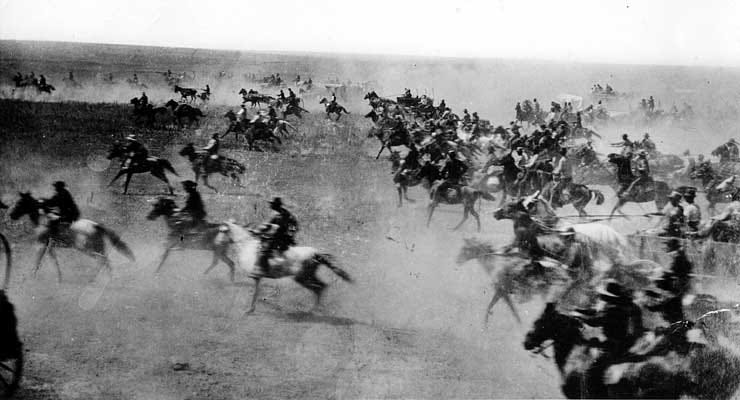
Today was their day. At the sound of a cannon, these men raced to claim their plot, riding across the 1.6 million acres that had just opened to settlement. Each man rode to his desired spot, planted his flag, and claimed ownership of a 160-acre plot. He then raced to the nearest land office, registered it, and then headed back for his family to start building a new life.
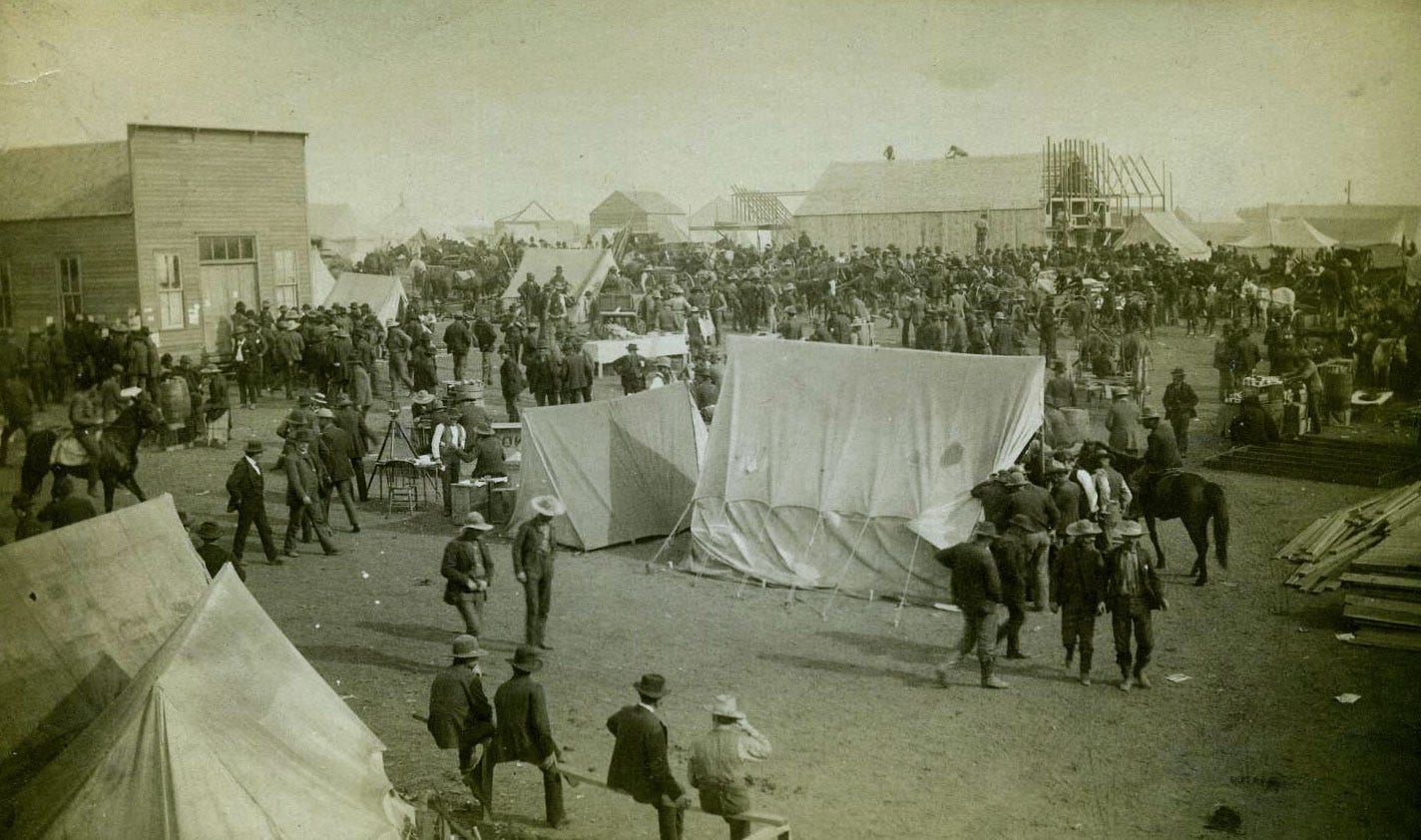
Disputes were common, and the whole process took years to sort out, but generally it was looked at as a success. Over the next decade, land runs became a common way to distribute the “unassigned lands” that were taken from the Native Americans over the previous century.
To be clear, none of this happened overnight.
Land wasn’t viewed the same way back then as it is today, and before the land run there were several competing ideas about what to do with it.
See, for most of the previous century, many of the early farmers who’d ventured out west were basically squatters. So, for early America, there were two main issues at play around public lands: preemption and distribution. Preemption meant letting the settlers have first right to the land, and distribution involved the question of what to do with the proceeds of the land sales, mainly whether it would go to the states or just to the federal government.

Now for the native land, this land was theoretically free from squatters, but it was now being debated as to how it should be split up. On this topic, there were two main sides: the northerners who had long fought for a program of land grants, versus the slave owners of the south who wanted to sell parceled land to the highest bidder.
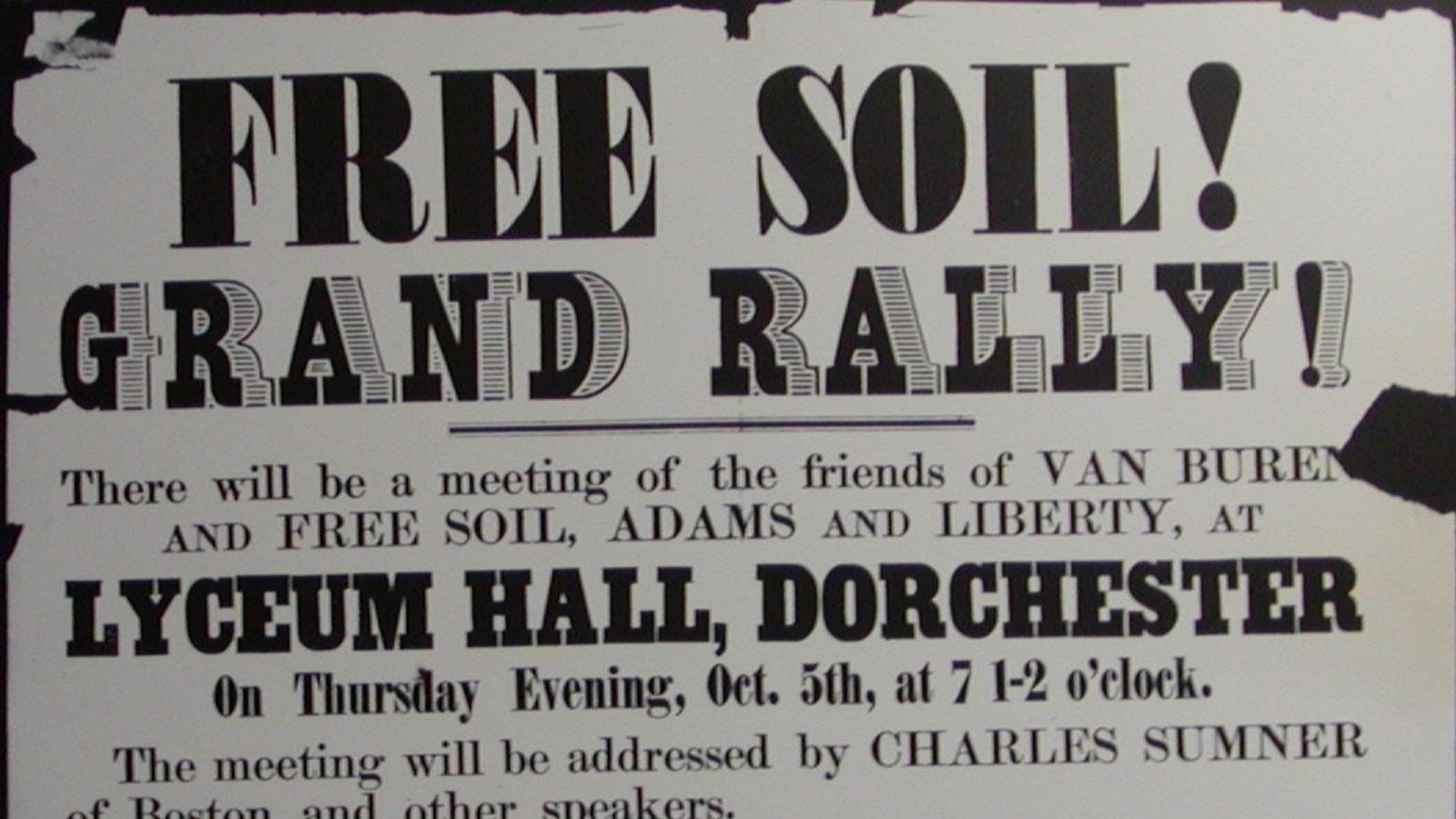
The “free-soilers” of the north believed that land was a given right for families. The idea of the “yeoman farmer,” or in modern speak, the self-sufficient homesteader, was alive and well. They believed that land should be given to individuals and families rather than the wealthy plantation owners who would develop the land using slaves and cheap labor.
In addition to the rich southerners, another group that was against free land was the employers up north, specifically the factory owners.
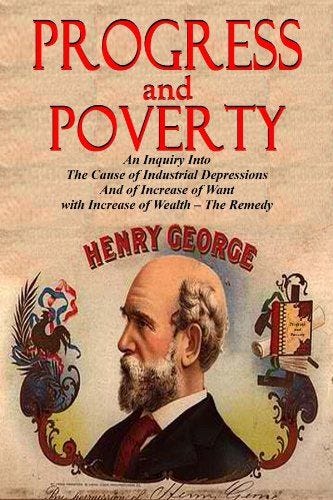
They saw the ability for employees to leave for land out west as a direct threat to their labor markets. Henry George, a famous economist of the time, wrote on how the ability of workers to just leave and start their own farms was actually the best way to keep labor practices and wages fair.
But that’s for another talk.
After decades of debate and of course the Civil War, land grants won out. Homesteading became common practice, and over the following century the federal government granted more than 270 million acres. Alaska was the last state to end the practice, in 1986.
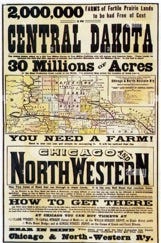
There’s a lot we can discuss here. This was literally nature being made available to the people of the US.
As we saw, there were some decisions that needed to be made though. How the land would be distributed, who would be eligible, and how much they would be able to take were all choices.
This of course, says nothing of the Native Americans whom the land was stolen from.
But the lesson that you’ll see time and again is that when a new territory is opened up, or a new technology is introduced, society does have a say. Especially when it comes to how things are distributed, which pieces get handed to the “free market” is almost always a choice to be made.
Neutrality is a myth.
Nowadays, any talk of restricting the market or innovation is met with accusations of communism.

But, even if you love the market, decisions still need to be made. How we set up property rights around IP, natural resources, and the financial laws that govern investment and resale all have to be decided by someone. Giving something over to “the market” is usually anything but a neutral choice.
Just as it was predictable that auctioning land off to the highest bidder would lead to plantation owners owning Oklahoma, there needs to be a goal.
Luckily, this isn’t a new problem. It’s one economic history is very familiar with.
Moral Underpinnings
Most of you know who this is even if you don’t recognize the handsome gentleman. This is Adam Smith.
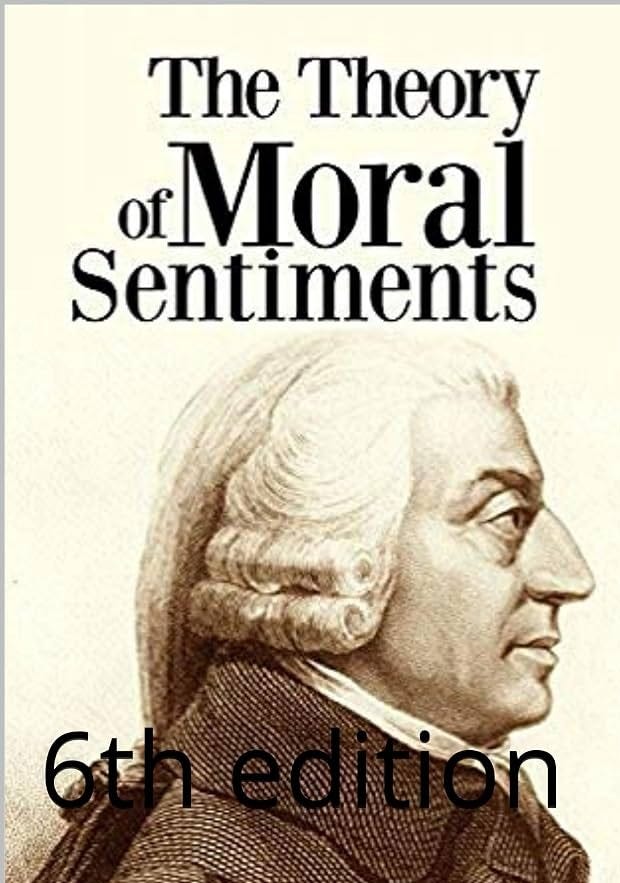
Listening to libertarians today, you’d think Smith was all for minimal government and the virtue of leaving things alone. In some ways he was, but in his lesser-known work here, The Theory of Moral Sentiments, he actually caveats the entire argument.
To him, society needed a foundation of morality for markets to function at all. Markets were a tool that worked, but only if people were honest and cared about each other. He cites the Golden Rule, mainly as a way of asking people to think about how others would feel about their actions. To him, this was the primary feature society needed in order to grow wealthy and successful.
The American founders quoted Smith and they knew these assumptions. As a result, they were pro-market, but they were also perfectly fine with the government legislating and helping cultivate the morality which markets obviously needed. This is why in early America, it was still very much the government’s job to educate people and help maintain a moral population. The goal of the system was a prosperous society, and prosperity required markets, but markets required a moral society first.
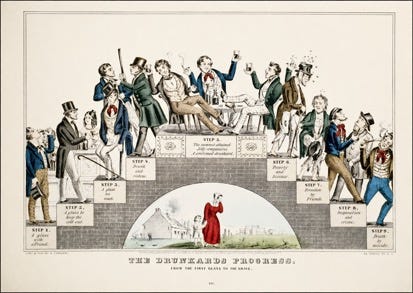
As a result, you saw things like alcohol and gambling bans. There were even laws against working on the Sabbath, laziness, indecency, and profanity. There was no such thing as a “free” free market. Every restriction worked toward the common goal of what people at the time viewed as a decent society.
Around what many call the progressive era, though, roughly the 1890s through the Great Depression, this began to change.
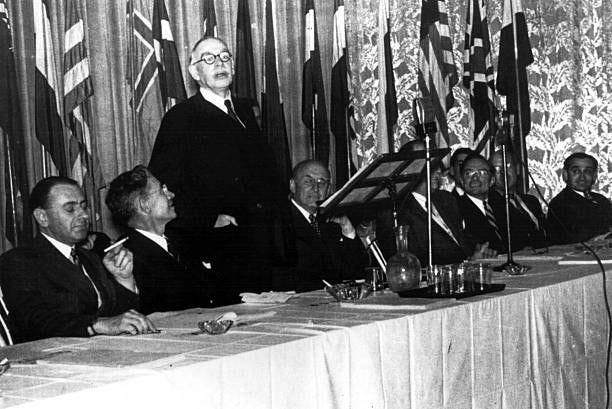
John Maynard Keynes, pictured here at the original Bretton Woods conference, believed markets were good at producing technological progress…but he also believed they were neutral, and therefore immoral. My favorite quote of his reads: “Avarice and usury and precaution must be our gods for a little longer still. For only they can lead us out of the tunnel of economic necessity into daylight.”
In other words, he believed we should allow ourselves to be self-interested and immoral, but only because markets were really good at creating technological progress. Once we were “free market” for long enough, scarcity would be solved and we’d be working 15-hour weeks, at which point we could start implementing morality again.
The free market side of this argument was also framed as moral, but it increasingly became more pragmatic. Bastiat and others argued that taxation was theft and that government itself was immoral, but this view was too extreme to take off. More mainstream arguments instead reframed the whole debate around efficiency.

This is the Mont Pelerin Society, a free-market group founded after World War II by Hayek and Mises. In their view, dangerous socialist revolutions were sweeping Europe, and they had to stop them. They had the stated goal of returning to the “Smithian free markets” that had worked for America in the past. To them, morality was not the missing piece. Governments and societies simply could not centrally plan an economy, because the economy was too complex for anyone to manage from the top down. This was an efficiency argument. The real reason the past had been prosperous was that the government was smaller.
This was the moment morality began leaving the conversation for good. The goal was no longer some shared vision of a decent society. It was simply assumed that everyone wanted growth, whatever that meant, and that capitalism was the best route to get there.
By the 1970s and 80s, markets had become, in most people’s minds, simply the efficient way to allocate resources, regardless of the society underneath them.
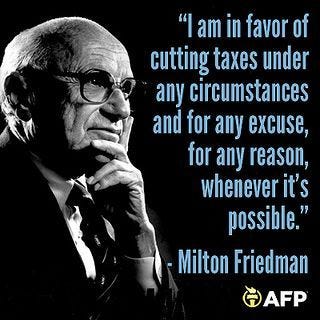
Milton Friedman and Ayn Rand took the argument even further. To them, markets weren’t just more efficient. They were good by virtue of what they did. Participating in markets the government did not control was freedom, and the two could not be separated. Self-interest itself became a virtue, and any interference by government or the collective decisions of society meddled with the natural outcome of human interest.
Note, however, they were not anarchists. They still believed markets needed some protection. To them, a military and a court system were necessary to enforce and protect contracts. Beyond that, the answer was to leave people alone and build a system that made sure of it.
This was not only a position of the political right. An idea took hold that the economy itself could be modeled. The market was good, growth for its own sake was the goal, and the remaining work was to make markets and the systems around them run better. The right viewed the government as the problem while the left increasingly viewed the economy as something to optimize by government officials.

On a fun note, this is Prasanta Mahalanobis. He was a statistician who built a model he believed could perfectly capture the Indian economy. If expanded far enough, he argued, it would let central planners allocate investment and capital correctly across every sector. The economy itself had become a math problem.
This was the shift. If you read economic textbooks today, whether it’s Mahalanobis’s model or the basic supply and demand model taught in economics class, neither one says anything about morals. They say nothing of the people underneath. The only goal is tweaking the inputs and expenditures to grow the economy. The question of what an economy was for, who it was for, or what society looked like as a result was of course not an economist’s problem.
To fast forward a bit, you eventually get to crypto and modern finance. Crypto is not just digital markets. It’s idealized. For the true cypherpunks that started it and still run it in many ways, there’s this idea that we can create digital systems that are free from human tampering. We all know the story. The bailouts of 2008 showed that governments would co-opt money, so we need to escape to our own world where our pure free markets and meritocracy can’t be captured by the political structures of democracy and actual people.

What these systems were actually for kept evolving. For Ethereum, the recent framing shifted to something called CROPS: censorship-resistant, open source, private, and secure. The purpose of the whole project became a mantra of neutrality. We are building systems for anyone to run any program on. Smith’s idea that markets needed moral people, or even Keynes’s idea that markets should be tolerated because they served some larger societal goal, both of those had vanished completely. It is not really an economy anymore; it’s just a series of systems that anyone can interact with whenever they want, and the assumption is that this would be best for the world.
The same vision now extends past crypto into nearly every industry. The idea of a global contract law that supersedes all courts. Rules of interaction that will never change. We can finally have a decentralized future that will be uncapturable by any government. You even see it with the idea of network states; people creating places where you can opt out of the government you’re born into. Whoever wants can leave with their digital value to these havens that aren’t encumbered by non-market interactions.
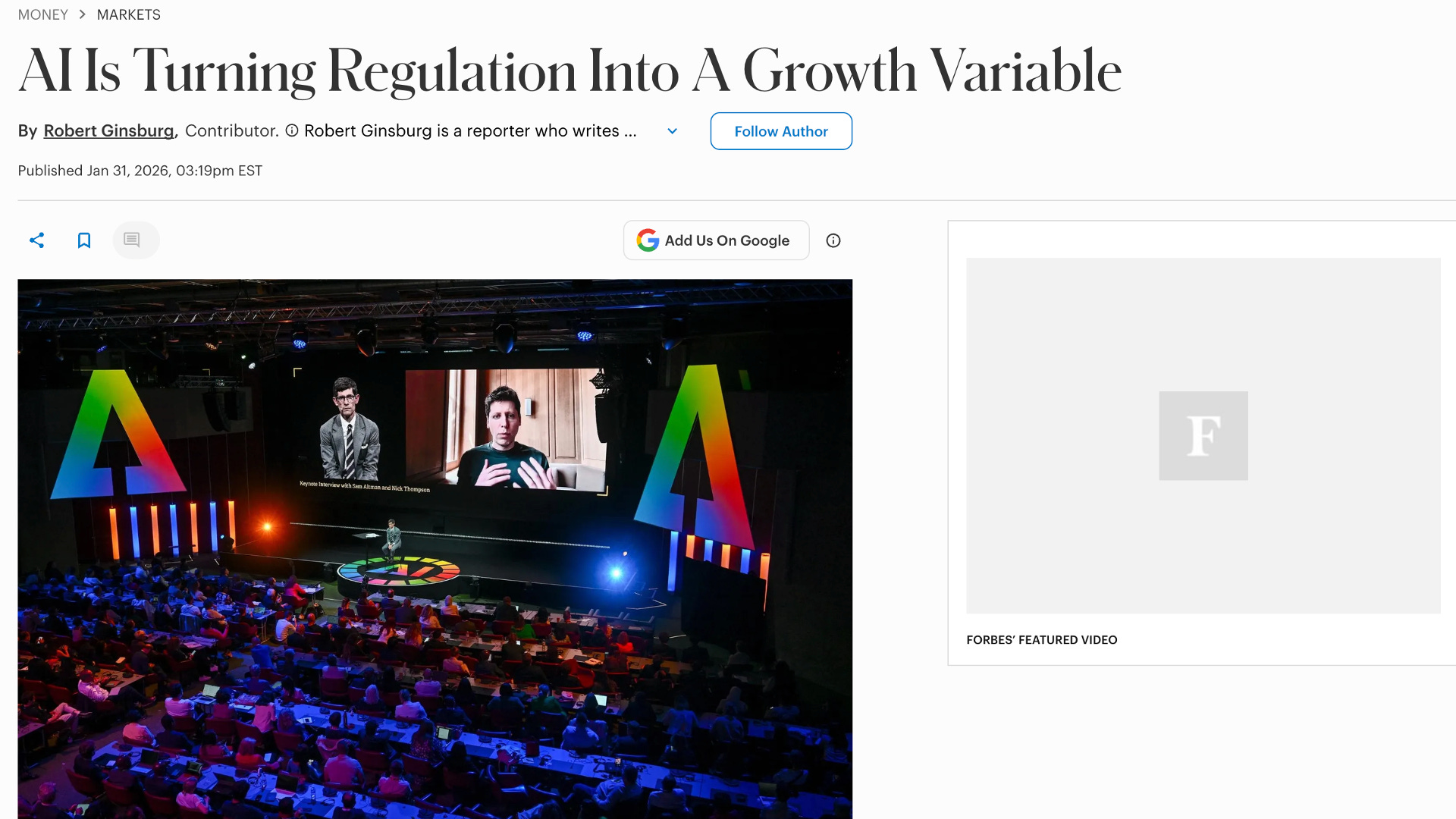
And now we are watching these modern frameworks get applied to AI. Regulation and democratic input are framed as obstacles to growth. Nature is being auctioned off with as few restrictions as possible and growth itself is treated as the goal on the assumption that more of it is the best outcome available.
But to reflect on crypto, does growth actually get you what you want?

This is the distribution of bitcoin miners. Two parties control over half of the hash power. Obviously crypto did grow…a lot. But even if you just look at crypto’s own stated goal of decentralization, it’s hard to see.
If you break it down differently, it’s all the same superpowers that control two-thirds of the digital world as they do the real economy. The real resources of electricity and security of hardware mean that you can’t really separate out a digital protocol from the real world.

The idea of running from governments is hard because at some point you get big enough that who controls real contract law matters. Maybe this will change, but even for network states, you have to note they still need approval of our human law to proceed.

And don’t think this is just Bitcoin. Ethereum block building tells a similar story. These protocols get captured, and they have to continuously upgrade and pivot to avoid the breakdown.
The point is that we’re not replacing the morality and goals of society with some perfect formula. It always gets messy and captured because social interactions between people are complicated. We make a formula, but then we find ourselves constantly having to fix things.
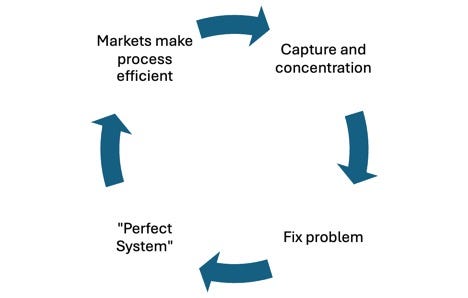
It’s a cycle. You hear it from crypto leaders all the time: we just need one or two more updates, and then the system can finally be good enough to let go of forever. We can ossify it and walk away.
But it never quite gets there. There’s always some new thing to solve. The market captures the government, and then the people have to fight the resulting big government to get back to something like a market. The system always needs correction.

It always comes back to the goal. What are the shared goals we’re actually building toward? For crypto specifically, what should it be used for? Banking the unbanked? Making stablecoins and finance more efficient? Twenty-four-hour trading and prediction markets? No one could really agree, so the default became just building a base product and hoping the use case would sort itself out.
If the main use cases turned out to be scams, unregulated gambling, or financing terrorism, then so be it. At least in theory the system could also be used for something worthwhile.

Think of a tunnel.
Imagine if instead of thinking about how the tunnel gets used, we focus entirely on the principles of good tunnel building. We aim for the biggest, most secure tunnel, with open access, the best lighting, and no stops anywhere inside.
It’s a noble goal, but the question of who uses the tunnel still matters. If it helps people escape a brutal government, or simply shortens everyone’s commute, this is a solid reason to keep perfecting it. But if the only exit is controlled by someone else, and most of the traffic turns out to be moving weapons for cartels, you should probably stop maintaining that tunnel. If there’s no goal, or if the goal is some unrelated metric like traffic volume or the toll you can charge, the whole project can succeed by its own measure while doing little good for society. The use case matters and it’s impossible to separate the goal from the usage.
Another analogy I love is the idea of one more lane. For those that know it, this is the story of induced demand.
Picture a nice small city. Traffic builds up on the way in, so people start calling their local representatives: add more lanes, widen I-whatever. As the expressway gets built, traffic does go down… but it’s only temporary. Pretty soon, things begin to change. More people can reach downtown faster, so offices turn into skyscrapers and condos slowly replace row homes. More subdivisions go up along the new road. Before long, the traffic is back, but even more concerning is that the whole downtown feels different. The walkable city you had is now a car-riddled metropolis.
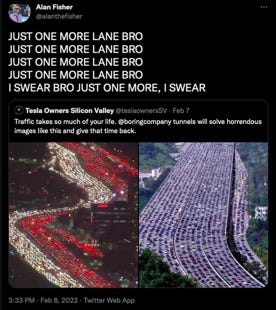
You were neutral about what kind of city you wanted, so the market built something unplanned. The market demanded roads, and you let someone build the thing that would meet that demand. How it fit into the concept of the town as a whole was never even thought of.

This is a data center, and there’s real pushback against these right now.
Whatever you think about data centers specifically, it’s a good sign that people are standing up and saying something. Just because the market demands a thing does not mean society is obligated to deliver it.
We saw a version of this with crypto, but with data centers, the pushback looks broader. People want a say in the outcome, and they care whether they can trust the companies building these things.
So, with this idea of a new nature that we have been circling all week, I keep coming back to how we should change our relationship with these entities. Which pieces should we hand over to the market, and how do we point them toward an actual outcome? Corporate charters, IP law, carbon credits, markets that abstract ownership and responsibility away from a real person, all of these are things we made up. How we describe nature turns out to matter just as much as how we describe our interaction with its inputs and outputs.

For another example, take a river.
Society has to decide who holds rights to it, and then what those rights actually allow. A river with a single owner is a different thing than a river whose owner can digitize those rights and sell them anywhere in the world. What do the tokens actually grant? Can we still swim in the river? Drain it? Pollute it and let the damage flow to everyone downstream? None of these are obvious choices, and they will probably need to shift over time as our sense of the goal shifts. Even the goal itself can change. If we all decide the river’s purpose is cooling AI data centers, we get a very different outcome than if we decide its purpose is to be preserved.

This brings us back to Adam Smith. In the 1700s, there was no real concept of nature and markets as separate categories. To Smith, markets would not succeed without a moral foundation underneath them. Markets worked for people with common goals.
Madison and Jefferson, two of our founding fathers, echoed the same idea when they set up our government. They believed government itself would not work without some shared vision of what society was for. The government and its laws were, in their minds, simply the written record of the social contract already in place, a way of writing down what everyone already wanted and felt. That is part of why they favored local government. A more homogeneous community could actually agree on shared goals, and government could work because of that agreement.

Nature might be neutral on its own, but the way we interact with it and describe it never is. For the new nature of AI and protocols, I hope we get more careful about which pieces we leave to auctions and to markets. Having more of a say in the outcome is better than having less.

Thanks for listening. Reach out if you want to talk through any of this further. I love riffing on it. And a shameless plug: I published a book earlier this year that gets into a lot of this in more depth. I hope you will check it out.