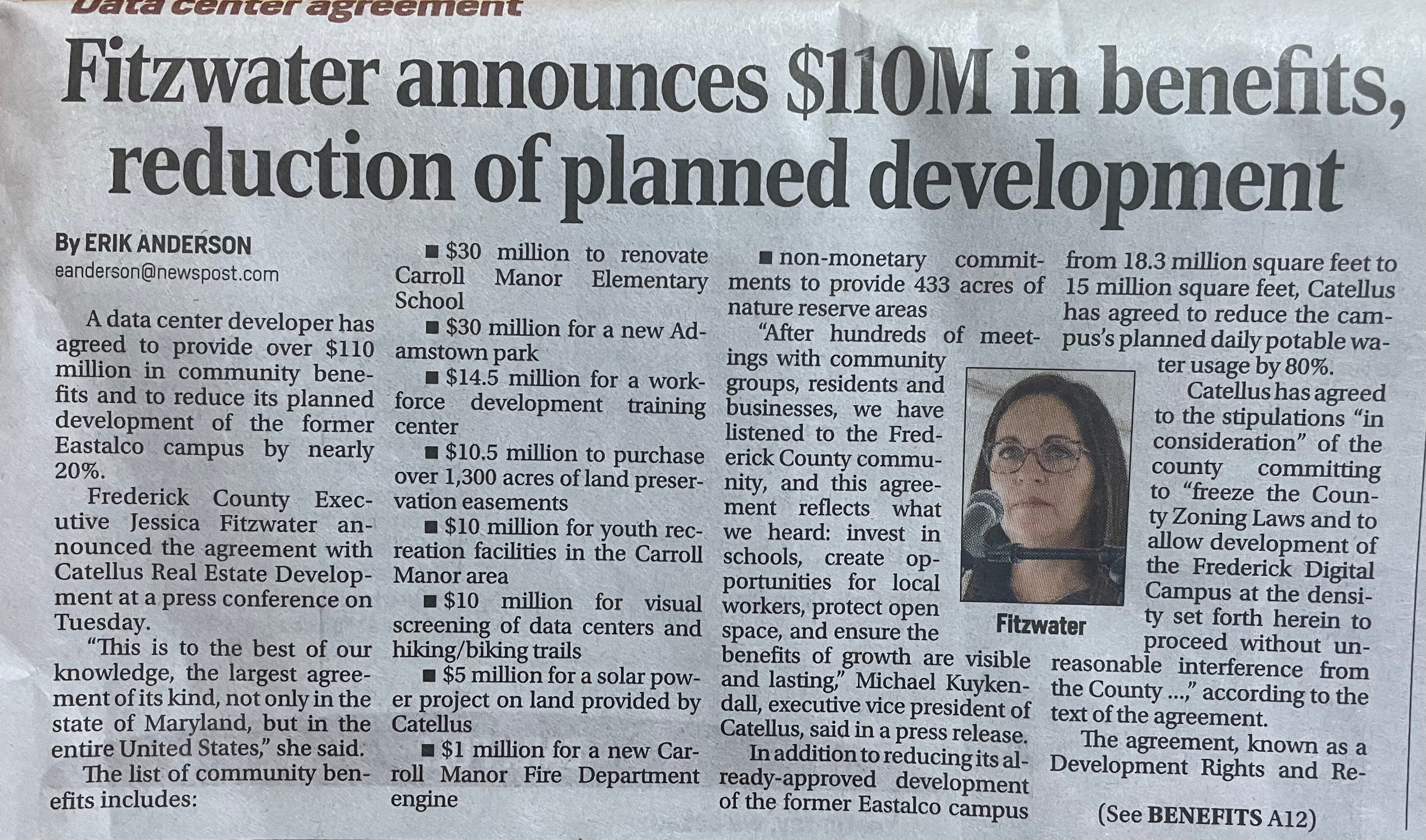

Jess is excited. It’s early 2024, and the bubbly county executive just got out of a meeting with a shockingly well-funded company that wants to build something big in her county. The same company already has a location in the state next door, and they seem fantastic. They’ll pay an obscene amount of taxes, and all they need is for the county to rezone a few pieces of land. To Jess, this job creator looking to buy vacant land seems like a win she can already put on her campaign website.
But the people push back.
It’s just a few leftist luddites harassing her on Facebook, but they say that water and electric rates will skyrocket.
Jess replies back that the neighboring state has fifty of these businesses, and their electricity and water bills are basically the same price. She also mentions that new capacity can be built, and they’re planning on doing so. She even loops back with the company to find out more about their business, and they inform her that they’ll just be running computers, nothing crazy. They again promise to pay for any new infrastructure as needed.
“Easy win,” she thinks.
In a few months, at the next county meeting, the handful of people from before have recruited friends and have now shown up in person. Now it feels like the entire environmental movement is pushing back.
The noise and water pollution issues are just too much for them to stomach. Apparently running computers kills nature and has countless harmful effects on the communities and animals adjacent to the building. They beg her to make sure these things aren’t built near any homes, schools, or forests.
Alright, she says, they can be noisy, and the pollution is a valid concern, so she says she’ll check again. She knows the land is unutilized farmland. No one would bat an eye if it turned into a junk yard or some unsightly manufacturing plant. But again, Jess discusses it with the company and some experts. Apparently, she finds out, these businesses can be dangerous if not built properly. She learns that localities should require noise padding, proper wastewater treatment, and, of course, for the new data centers to be kept far away from sensitive areas and placed in only heavy industrial zones instead.
By the time she goes to tell them the good news, the people have multiplied again. Now it’s normal people too. Everyone seems to hate these companies.
Seeing a campaign coming up, Jess signs an executive order mandating that these new data centers be built to the strictest standards around. There’s no way anyone can disagree now.
The companies are annoyed at first, but actually still want to move forward. They throw in money for the local schools and even give a donation to Jess’s campaign to show support for her willingness to engage them.
As predicted, though, the people still push back. At this point it’s everyone in the county.
Some of the protestors are still pushing back against electricity and water issues. Others bring newer critiques.
“The company’s only going to create a handful of jobs,” they claim, as if it were ever the goal.
“Actually, it’s just that the AI isn’t even worth it,” they add. “It’s going to take all of our jobs, enrich a handful of people, and make us all dumber, like social media.”
Jess sighs. At this point, she’s convinced that these people are brainwashed by online rhetoric. She’s hopeful that if she makes it past the election, it will all just blow over.
BREAKING - Merck pays $4.85B after hiding heart attack and stroke risks from doctors and patients
Clearly not all data center negotiations are as innocent as this one. Sometimes the deals reach cartoon levels of blatantly evil practices: literally forcing NDAs, moving through political back doors, or just ignoring the law altogether in the approval process.
That said, the protests happen regardless of those issues.
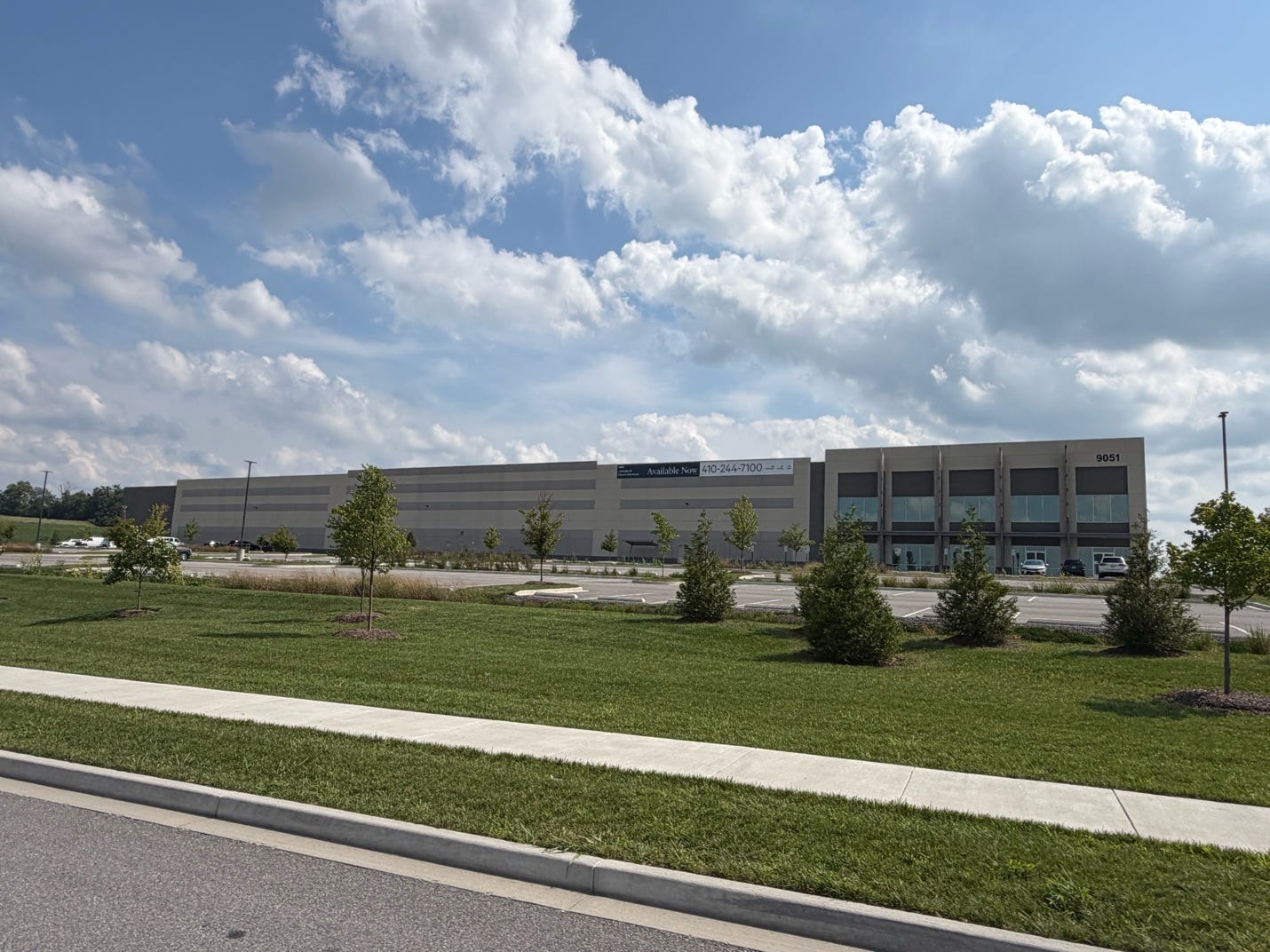
To make it clear: data centers are just racks of computers.
A handful is likely fine, but a lot can be a strain on resources. No different than houses or manufacturing or cattle farming. This isn’t rocket science, yet, for some reason, agreements can’t be found.
It’s weird. No matter what the company or the politician says, the people push back.
At what point do we need to look at the protestors and ask if they even want to make a deal?
Is that even ok?
More importantly, how the hell did it get this way?
In the world of data centers, the real estate in question is being sold to a company that doesn’t live in the town. The customers of that company also don’t live in the town. There are very few workers at the company. The company wants as much electricity and water as we’re willing to sell.
The infrastructure was never set up for this.
The entire model of corporate charters and commercial ownership of real estate was developed on the theory that there were always workers or customers that the town had an incentive to support. Water and electricity are regulated public utilities you sell at cost because the community also gets some jobs and a new place to shop. We’re not selling resources for profit. Sure, there’s benefit in the money for resources, but the company also creates social goods in the jobs and the thing being built. Now we’re just being asked to price our water, land, and electricity grid.
We’ve never really thought of an exit price.
In crypto, the regulatory strategy of “ask for forgiveness, not permission” became the norm.
I watched as countless companies went to regulators to ask for approval. The regulators would take years debating the legitimately difficult choices, going back and forth with the new applicant.
During that time, some other companies wouldn’t ask, they would just launch. They would claim to be “decentralized” versions. They would add some form of technical obscurity, and many times, they would absolutely take off in terms of adoption. They’d find product market fit and billions in investments.
By the time the regulated option became available, the decentralized versions or the traditional banks were ready to pivot into that lane as well.
BREAKING - Countrywide settles for $8.68B after deceiving borrowers about loan terms ahead of the housing crash
Prediction markets, derivative exchanges, early-stage equity or “governance” tokens, stablecoins, and even crypto exchanges – all of them had an existing regulatory structure.
It was always the same playbook. The underlying details of the crypto version were slightly different, so the founders claimed novelty. Most of these guys were like 22. They honestly had no idea how regulations worked. The VCs and investors, however, almost certainly did know. But they didn’t care. The demand was there, and they weren’t liable.
The legitimacy of a 7-figure seed check and dozens of similar companies racing to the scene gave the founder more than enough peace to move forward.
The company would launch with some meaningless level of decentralization (e.g., have five people run your servers instead of one). They’d then issue a token and sell it to retail. By the time the regulators pressed charges years later, the VCs and founders were already onto their next venture. Those still around would agree to make some adjustments after paying a fine.
Regulators claimed the fines to be a sign of success, but they haven’t stopped anyone. To the up-and-coming founders, the fines and lawsuits increasingly meant you made it.
The running question for lawyers was “Can I go to prison for this?” The whole game was a free options contract: either make it and have the company pay a fine (you’re rich by then), or the company doesn’t work out, and you just keep your salary for the next year or two. As long as you don’t help terrorists or launder money, the optimal strategy is to ignore the law, launch, and then deal with it later.
So, after people got hacked, exchanges went under, and retail investors lost the vast majority of their investments, the regulators still can’t figure out why the law is ambiguous.
Financial engineering has expanded this crypto-startup mentality to every industry. Whereas founding a company or building a business used to mean building a lifelong career, it now represents an increasingly shorter amount of time. It’s all driven by the same phenomenon of exit. I make money, I leave, and someone else deals with the consequences.
Thanks to PE or pre-IPO markets, founders and investors from AI companies to restaurant owners can now exit whenever they wish. Why set up a sustainable business when you can pump the books and get out?
The incentives are black and white, and yet we’re absurd to bring it up.
For the bigger companies, exit has long been the goal of the executives. “The name of the game, moving the money from the client’s pocket to your pocket.”
This principal-agent problem has always existed, but the system is now eating itself. Decades of self-interest-as-a-goal are pushing communities to throw out the baby with the bathwater. From ideas of government-run grocery stores to straight up banning data centers, can you really blame them?
BREAKING - Whistleblower reveals Facebook hid mental health research showing harm
The free-market theory is that what you do for your employer is good for society by definition. But somewhere along the line, it broke.
Those of us that were around during the great financial crisis watched as bank executives made money during the bubble and then walked away with golden parachutes. They got bonuses up until the crisis and then got to keep every penny. Those of us in crypto saw the same story as well; founders and VCs would make millions only to watch the token crash to zero.
For any business, after the founders and the original investors leave, the MBA caretakers and fund custodians are even worse. To them, fines are just another budgeted line item. We all know this. We all know the negative effects of salaries linked to temporary stock performance, and yet here we are.
BREAKING - Senate hearing revealed Irish subsidiaries paid no tax to any nation on tens of billions in profit
Back to the data center approvals in these small towns.
People know that no matter what deal they happen to cut, it’s likely going to be ignored at some point in the future. The founders and investors who are pushing these deals are not liable. They’re on the way out, and they will be fabulously wealthy regardless of how this plays out. The dreams of a stable business that serves the community are a pipe dream less plausible than the alternatives thrown around:
The development plans will change, and the people will later learn it’s much larger than they agreed to.
Some undisclosed danger of the noise or radiation will be disclosed in decades.
The mini nuclear power plants being proposed to power these locations will have some catastrophe. We’ll be told it was an anomaly that could have never been predicted.
The wastewater will accidentally seep into the water table and poison residents who will lose every penny they have in their now unsellable homes.
The AI bubble pops, and the eyesore of a slowly decaying warehouse will serve as a reminder for decades to come.
BREAKING - EPA notice revealed “defeat device” software that let diesel cars cheat emissions tests
Politicians and companies will push back, saying that the contract will force a beneficial agreement.
But let’s be serious. What are the citizens going to do? File a lawsuit?
There are movies made when a small town successfully sues a giant corporation.
Even the federal government struggles to win cases. For local or state governments, they don’t stand a chance. Amazon alone is worth forty times Virginia’s entire state budget. Everyone knows corporations have more to spend on legal fees, and there is nothing small towns can do about it.

No one’s going to tell you there’s no police.
In the same way, no one had to tell corporate investors and executives that they aren’t liable for what the company does. No one had to tell the politicians they can inside trade or have their spouse directly involved in the companies they regulate.
Each group will deny it. They’ll pretend they can’t. The good ones will be bound by the invisible law for much longer than most, but eventually they’ll be replaced by the person who will.
BREAKING - Breach exposed 147 million people’s data after the company failed to patch a known vulnerability
For some reason we can’t just admit the system is broken.
I think that deep down, most of us fear what that actually means. If we really don’t trust corporations… if the rule of law really is broken…
It’s scary, and we’re trying our best to avoid it.
BREAKING - PG&E pleads guilty to 84 counts of involuntary manslaughter after neglected equipment causes fire
So, when people ask why citizens don’t want data centers, it’s not that they don’t understand the science or that they haven’t read the studies comparing golf courses to data centers. It’s actually perfectly valid that they just don’t trust these companies. Time and time again, these large companies have proven that they are not part of our communities, and they do not care. If backing out of one of these contracts increases their bottom line, they don’t live here, and they won’t think twice about it.
We need to quit assuming people need a why. Sometimes protecting a good thing requires conservative thinking that puts the onus on the thing wanting change.
BREAKING - Amazon to pay $20.5 million settlement over data center’s nitrate pollution
Just as you’ve probably started ignoring all of the links in this article, most of us ignore the reality all around us that the structure of businesses and their relationship to society is broken.
If AI is that important, we need different options. Maybe locally owned options. Maybe we should start revoking corporate charters or changing what “limited liability” looks like. Maybe a complete rewrite of equity ownership and the ability to sell. I honestly don’t know. But we need to restore trust, and no amount of promised revenue or cost-benefit analysis will help.